


Maintaining your Nissan with Genuine Nissan Motor Oil and Oil Filters
How to Maintain your Nissan with Oil and Oil Filters
When it comes to the safe and efficient function of your Nissan, motor oil is a vital component. Your vehicle relies on oil to clean, lubricate, and condition many moving parts within the engine, which makes choosing a high-quality oil and filter a crucial first step in DIY engine oil changes. If you'd like to tackle the job yourself, use this guide to learn when and how to change your oil and Nissan oil filter.
What Kind of Oil and Filter Is Best For My Nissan?
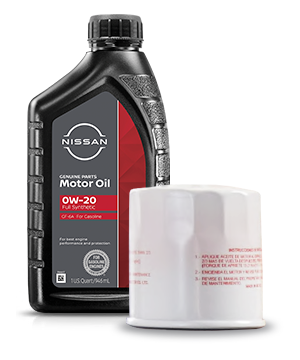
When it comes to oil and oil filters, there are lots of choices in various price ranges. Some oils may promise "quality conditioning," while some filters may market "extended performance." However, your Nissans powertrain was designed to function around Genuine Nissan Parts, so why not trust that same quality when servicing your vehicles oil and oil filter?
Whether you're using conventional or synthetic options for your next oil change, Genuine Nissan Motor Oil offers protection and strict quality testing that you can trust, just like your vehicle. It provides superior cooling, protection, and conditioning, helping to extend the life and performance of your Nissan for miles to come.
Genuine Nissan Oil Filters are no different. Every OEM Nissan oil filter is designed to help extend the life and performance of your vehicles engine. Each oil filter features an anti-drainback valve that maintains the oil pressure in your engine, even after shutdown. This means that the next time you start your vehicle, its already pressurized with oil, helping to decrease engine wear and lengthen your motors life.
When Should I Change My Oil?
Your Nissan was designed to run efficiently for several thousand miles between oil changes. However, regularly checking and changing your oil are two of the best ways to ensure the long, reliable function of your Nissans engine. The intervals at which you should change your oil and oil filter depend on several factors, including the age, model, and powertrain of your vehicle, as well as the prior maintenance.
Consider Oil Type
Generally, synthetic oils have a longer usable life than conventional oils, which allow them to last as many as 10,000 miles. Modern conventional oils, however, should be changed every 3,000-5,000 miles. When changing your oil and filter, you should always consult your owners manual for the proper specifications and quantity.
Consider Service Intervals
Time is also a factor in the usable life of oil. Regardless of mileage, Nissan recommends that your oil and oil filter be changed no less than once every six months. When in doubt, consult your owners manual for your vehicles specific requirements./p>
Consider Oil Level
Driving with dangerously low oil levels can cause permanent damage to your engine and increase the likelihood of a breakdown. Check the oil levels regularly using the dipstick. Should your oil become low, it may be best to get it changed sooner rather than later.
Consider Your Oil-Life Monitoring System
Some vehicles come equipped with a specific oil change light, while others may relay the low oil level memo by way of the "Check Engine" or "Maintenance Required" dashboard lights. However, the latter two lights can be triggered by various mechanical issues.
If you notice either of these indicators, check your oil levels, and service it if needed. If you're unsure, have a certified technician inspect your vehicle at an authorized Nissan service center to determine the cause.
What Do I Need To Change My Oil?
Your Nissan has been designed for easy maintenance, whether by you or by a factory-trained Nissan technician at your local service center. Changing your oil is an easy way to save money and learn more about your vehicle. If you decide to change your engines oil on your own, there are just a few things you'll need for the job:
- Gloves
- Jack and Jack Stands
- Drain Pan
- Socket Set
- A Dry Cloth
- Funnel
- OEM Nissan Oil Filter
- 4 Quarts of Nissan Motor Oil (see your owners manual for specifications and quantity)
- Nissan Oil Pan Drain Plug Gasket
How to Do a Nissan DIY Oil Change
When doing a DIY oil change, start by parking your vehicle on a dry, flat surface. Then, follow the steps below to complete the Nissan oil change.
- Lift both (forward) sides of your vehicle using floor jacks.
- Use a jack stand to keep your vehicle in place.
- Locate and unscrew the oil cap beneath the hood.
- Place the drain pan beneath the oil drain plug.
- Remove the drain plug.
- Once the oil has drained completely, clean the drain plug area.
- Replace the plug.
- Loosen and remove the old oil filter.
- Drain it in the oil pan.
- Smear a small amount of new oil across the new filters O-ring.
- Install and tighten the filter.
- Using the funnel, pour the bottle of Nissan Motor Oil into the reservoir.
- Replace the oil cap.
- Circulate the new oil by running your engine for approximately 30 seconds.
- Check for oil leaks.
- Using the dipstick, check to ensure your oil is at the proper levels.
- Add more oil if needed.
- Lower your vehicle off the jack stands.
- Properly dispose of the old oil by visiting your local collection site for recycling.
Contact your local Nissan dealer if you have any questions about changing your oil or would like to have your oil and filter changed at an authorized Nissan service center. Whichever route you choose, trust Genuine Nissan Motor Oil, Oil Filters, and parts to ensure factory-grade performance for miles to come.