


3 Different Types of Car Mirrors and How to Use Them
October 10, 2023
Road visibility is crucial ‐ and while your windshield helps you see the road ahead, you'll need to count on the proper use of your car mirrors to help you see the road beside and behind you.
Has it been a while since you passed your driver's license exam? If so, you can likely benefit from a refresher course on the different types of car mirrors and their best uses. Use this guide to learn about what types of mirrors your vehicle is equipped with, which mirrors you can add, and how to make use of them all to get a more complete view of the road in all directions.
Car Mirror Basics: The 3 Most Common Types of Mirrors in a Car
The Rearview Mirror
As the name suggests, your rearview mirror can help you achieve visibility of the road behind you. In most cars, your rearview mirror is typically affixed to the top middle of the windshield. If your rearview mirror is adjusted correctly, you should be able to comfortably see a full view of your rear windshield without needing to move your head or body.
Rearview mirrors are typically constructed of convex first-surface chrome glass to help reduce glare and ensure that you have a wider, more complete view of the road behind you. In many cars, flipping a standard rearview mirror down will help reduce glare from headlights for nighttime driving. Auto-dimming rearview mirrors automatically adjust and adapt to light changes ‐ like bright headlights, road glare, or sun. Your vehicle may come equipped with an auto-dimming rearview mirror, or you can opt to upgrade your existing rearview mirror.
The Sideview Mirrors
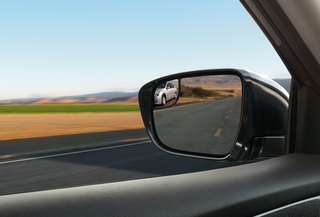
Your sideview mirrors, also known as wing mirrors or door mirrors, assist when you need extra road visibility in all directions. You can find your sideview mirrors on either side of your vehicle's doors. Your wing mirrors are composed of two parts: the mirror housing that attaches to the side body of your vehicle's door, and the mirror glass. Depending on your trim package, your side mirrors may be equipped with blind-spot mirrors, defrost, a built-in turn signal, or auto-dimming glass.
Your left and right side mirrors may look alike and perform similar functions ‐ but they do slightly differ in terms of construction. The mirror glass in your driver's side wing mirror is usually created with flat glass, while the passenger side mirror glass is often made from slightly-curved convex glass. The convex glass in the passenger's side mirror provides drivers with a broader and more complete view ‐ but also results in a distorted image. Hence, the passenger's side mirror glass often comes with a warning label that states, "objects in mirror may be closer than they appear."
Blind Zone Mirrors
Blind zones, also known as blind spots, are areas you can't see from your other mirrors or in your peripheral vision while your vehicle is in motion. You can typically mitigate blind zones with proper mirror adjustment. However, some vehicle body types are more prone to blind zones, no matter how meticulous you are with your side mirror positioning.
Those who battle the blind zone ‐ or who prefer the comfort of additional visibility ‐ often opt to add blind zone mirrors to their vehicle. Blind zone mirrors are typically smaller angled or convex mirrors that adhere to your wing mirrors to help bridge the visibility gap. With proper positioning, your blind zone mirrors may be able to help eliminate or reduce the size of your blind zone.
How to Adjust Your Car Mirrors
It's time to dive into how to use and adjust each of your mirrors for help with optimal visibility.
How to Adjust Your Rearview Mirror
Your rearview mirror features a double-swivel mount, allowing for adjustment and angling to account for driver height and positioning. With your vehicle in park, you can complete these steps to gently adjust your rearview mirror until you can comfortably and clearly see the middle back of your windshield.
- Step One: With your vehicle in park, get comfortable in the driver's seat. Sit as you would when driving and double-check that you have access to your steering wheel, gear shifter, and pedals.
- Step Two: While remaining seated, toggle your rearview mirror until you can see the middle back of your windshield without having to move your head or body.
- Step Three: Examine your work! Sit as you would while driving and ensure you have a complete view of the entire rear windshield without needing to move.
How to Adjust Your Side View Mirrors
Before using your side view mirrors, you'll need to ensure you have adjusted it to best suit your height and driving position. Follow these steps to help ensure you've got the optimal angle for both your driver's side and passenger's side mirrors.
- Step One: Put your vehicle in park. Then, adjust your seat to a comfortable driving position. Ensure you can easily and comfortably reach your steering wheel, pedals, and gear shifter.
- Step Two: Find each door mirror's electronic or manual controls.
- Step Three: Begin by adjusting your driver's side mirror. With your windows rolled up, lean your face and body toward the glass while remaining seated. Then, look to the driver's side wing mirror and toggle the driver's side mirror controls until you only have a slight view of your vehicle's body.
- Step Four: Now it's time to adjust your passenger's side mirror. While remaining seated, lean towards the passenger's side of your vehicle until you are just over the center console or below the rearview mirror. From here, adjust your passenger's side wing mirror until you have only a slight view of your vehicle's body.
- Step Five: Resume normally sitting in a comfortable driving position. Take a peek at both of your side mirrors. If you've angled your mirrors just so, you should be able to see a passing car or pedestrian walk seamlessly through each side view mirror with minimal or no overlap without moving your head or body.
- Step Six: Readjust your mirrors each time you move the driver's seat or operate someone else's vehicle.
How to Place Your Blind Zone Mirrors
Blind zone mirror placement can be tricky. You'll want to be cautious when placing your blind zone mirrors. In most ‐ but not all ‐ cases, it's recommended that you position your blind spot mirrors in the upper or lower outside corner of each side mirror. This way, you can help reduce your blind spot but keep the rest of your side mirror clear. However, the right placement may vary depending upon multiple factors, such as the type of vehicle you drive, your height, and your preferences in general. Be sure to reference any instructions that come with your blind zone mirrors before installing.
- Step One: With your vehicle in park, first ensure your wing mirrors are properly positioned. Refer to the steps above for tips on how to adjust your wing mirrors
- Step Two: Sit back as you would while driving with your car in park. Make sure you can easily reach your steering wheel, pedals, and gear shifter. Have a friend or family member walk behind your vehicle. Theoretically, with proper side mirror adjustment, you should be able to watch them seamlessly pass behind you using your left and right wing mirrors.
- Step Three: Tentatively and without permanent affixion, place your blind zone mirror to the driver's and passenger's sides on the upper outside corner. Try to maintain as much "free" wing mirror glass as possible.
- Step Four: Sit back as you usually would, and have your assisting friend or family member pass by again, checking to see if they remain visible as they pass through your side mirrors with the assistance of your blind zone mirrors.
- Step Five: : Impermanently reposition your blind zone mirrors to the lower outside corner of each wing mirror, checking again with a friend or family member to see if your blind zone has resolved.
- Step Six: Make a note of which positioning, whether in the upper outside or lower outside corner, best resolved your blind-zone issue.
- Step Seven: : Adhere your blind-zone mirrors to your wing mirrors. Once placed, your blind zone mirrors should function as an extension of your side view mirrors.
Tips for How to Use Your Car Mirrors
With your car mirrors adjusted, it's time to brush up on how to best use your car mirrors.
Think of Your Car Mirrors as a System
While your car mirrors each provide a unique function, each mirror only provides one piece of the whole picture ‐ and cautious driving requires a complete view at all times. From taking a turn to backing up, you should be quickly referencing every mirror before making a driving decision instead of relying on just one car mirror. That also means that you should repair or replace broken car mirrors promptly.
Take Quick, Frequent Glances
There are certain instances where using your rearview or side view mirrors is a must ‐ such as when you're backing out of a parking spot, parallel parking, merging, or changing lanes. However, quick, frequent glances at each of your mirrors can help ensure you have a clear view of upcoming traffic while you're in motion, too.
Car mirrors are important tools that help you stay informed before, during, and after every driving decision. In order to stay aware of your surroundings, it is generally recommended that you aim to use your mirrors in conjunction. Try to take a quick glance from the road ahead to a mirror around every five seconds or so, working clockwise starting from your driver's side mirror, to your rearview mirror, and to the passenger's side wing mirror.
Turn to Your OEM for Replacement Mirrors and Mirror Accessories
Your mirrors are a must for a cautious and enjoyable driving experience ‐ don't drive without them! Whether you need to replace a broken side mirror or want to improve your nighttime driving experience with an auto-dimming rearview mirror, turn to your OEM at Nissan Parts & Accessories. Find OEM Nissan parts near you or order the mirror you need online and schedule an appointment at your local service center for help with installation.
Shop Nissan Body, Interior and TrimShop All Nissan PartsView More Blogs