


The Ultimate Guide to Car Brakes
July 28, 2020
When it comes to the most important "car stuff" every Nissan driver should know, understanding how your brakes work is right up there with knowing how to change a tire or check your oil. That's why we put together this helpful guide with everything you need to know about car brake parts, how car brakes work, types of car brakes, common brake problems, and more. Curious about how long brake pads last, why your brake light might be on, or why your brakes are making that weird squealing noise? We've got the answers below!
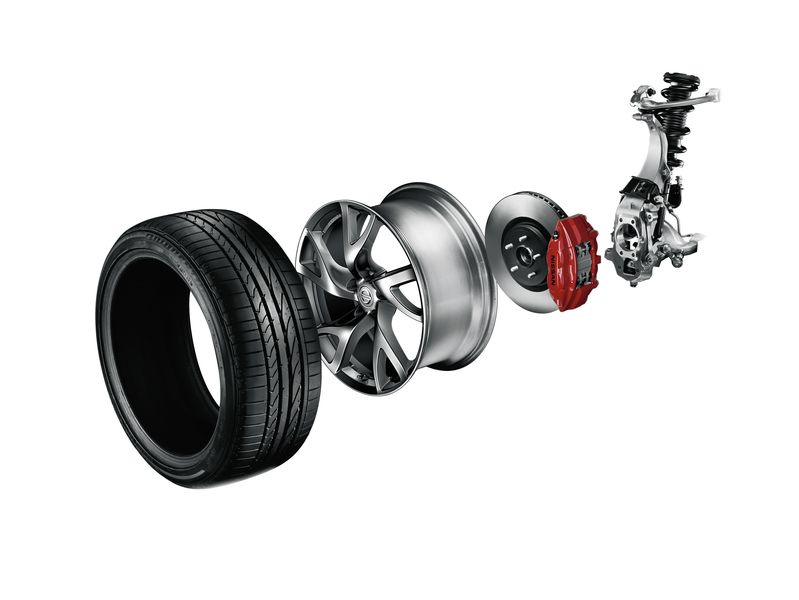
Glossary of Car Brake Parts
We believe you should be able to speak confidently with your Nissan Certified Technicians or any service provider about the ins and outs of your vehicle. That means being familiar with all the different parts that make up your brake system. Use the glossary below to get an overview of all the brake parts found in your hydraulic braking system. (Note that if you drive a hybrid, you may have a different type of brake system.)
- Brake Pedal: Foot pedal below the steering wheel that the driver uses to engage a vehicles brake system.
- Master Cylinder: Compartment near the engine that holds brake fluid and a piston assembly for moving brake fluid through the brake lines.
- Brake Fluid: Also known as hydraulic oil. The fluid that is pushed through the brake lines and creates hydraulic pressure that engages the vehicles brakes.
- Brake Lines & Hoses: The system of steel and rubber tubes used to transfer brake fluid from the master cylinder to each wheels brake assembly.
- Equalizer Valve: Adjusts pressure between the front and rear brakes to ensure even stopping power when brakes are applied.
- Pressure Differential Valve: Measures pressure across a vehicles brake system and activates the brake warning light if a pressure differential is detected.
- Combination Valve: An equalizer valve and pressure differential valve combined into a single unit.
- Electronic Brake Force Distribution (EBD): A feature of newer vehicles that replaces the equalizer valve in favor of an onboard computer that ensures brake pressure is distributed evenly at each wheel.
- Disc Brake: The most common and most efficient type of hydraulic brake system found in all modern vehicles.
- Drum Brake: An older, less common type of hydraulic brake system. Found in earlier vehicle models but occasionally used as rear brakes in newer cars to reduce manufacturing costs.
- Caliper: Disc brakes only. An assembly mounted to each wheels rotor that houses the brake pads, pistons, piston seals, dust boot, and bleeder screw.
- Floating Caliper: A common type of caliper with one or two pistons on the rotors inner side. When the brakes are applied, this caliper moves or "floats" simultaneously with the piston(s) to press the brake pads against the rotor.
- Fixed Caliper: A less common type of caliper with pistons located on both sides of the rotor. When the brakes are applied, this caliper does not move. Instead, only the pistons are used to press the brake pads against the rotor.
- Rotor: Disc brakes only. The iron disc attached to the caliper assembly that spins with each wheel. Slows the wheels spin when the brake pads are applied.
- Brake Pads: Disc brakes only. Metal plates mounted on each side of the caliper and made with a composite, heat-absorbing material that, when pressed against the rotors sides, create the friction that slows down the vehicle.
- Bleeder Screw: Disc brakes only. A metal screw mounted to the caliper necessary for servicing brakes and replacing brake fluid.
- Dust Boot: Disc brakes only. Prevents dust, grime, and other contaminants from entering the caliper piston.
- Brake Shoe: Drum brakes only. Similar to brake pads, brake shoes are metal plates lined with friction material used to slow the spinning of the brake drum when brakes are applied.
- Backing Plate: Drum brakes only. The metal plate used to hold all of the drum brake parts together.
- Brake Drum: Drum brakes only. An iron disc that houses all of the drum brake parts and spins with the wheel.
- Wheel Cylinder: Drum brakes only. A metal cylinder with pistons inside used to push the brake shoes against the brake drum and slow its rotation.
- Return Springs: Drum brakes only. Used to pull the brake shoes back into a neutral position once braking pressure has been released from the wheel cylinders pistons.
- Pistons & Piston Seal: The metal cylinders found in both disc brakes and drum brakes. Used to push the brake pads or shoes against the rotor or brake drum when braking. The rubber seal prevents fluid leakage and moves the pistons back into place when brake pressure is released.
- Parking Brake: Also called the emergency brake, this is a mechanical system entirely separate from the hydraulic system of disc or drum brakes. It is designed to bring a vehicles rear wheels to a stop in the event of total brake failure.
- Power Brake Booster: A brake pedal attachment designed to amplify foot pressure, ensuring that even the largest vehicles can be brought to a stop with the brake pedal.
- Anti-Lock Brake System (ABS): An electronic system designed to prevent a vehicles wheels from locking up in the event of a sudden and forceful application of the brakes, allowing the driver to maintain control of the vehicle.
Types of Car Brakes
There are four types of car brakes used in todays vehicles. These include disc brakes, drum brakes, an emergency brake, and anti-lock brakes.
Disc Brakes
Most of todays vehicles have disc brakes on all four wheels. They are similar to drum brakes in that they operate using hydraulic oil (AKA brake fluid), but disc brakes are far more efficient. Disc brakes provide greater stopping power, disperse heat better, handle wet conditions better, and have a simpler design.
Disc brakes have greater stopping power because they can apply the brakes faster and more forcibly, allowing vehicles to stop in shorter distances. The heat created during braking is better managed in disc brakes because they are exposed to the air, unlike drum brakes. Open-air exposure helps the brake pads cool faster and lasts longer, but it also allows them to shed water more efficiently in wet conditions.
What's more, disc brakes are "self-cleaning" in that the brake pads continually wipe the rotor free of dust and grime, helping the parts last longer between servicing. A disc brake assembly consists of brake pads, rotor, caliper, pistons, dust boot, and a bleeder screw.
Drum Brakes
Though disc brakes and drum brakes were invented around the same time, drum brakes were the popular brake standard for the first half of the 20th century. Nowadays, however, drum brakes have largely been replaced by disc brakes, which have undergone many design improvements over the years.
There are only two real advantages drum brakes have over disc brakes. First, they tend to be less expensive to manufacture and repair. Second, a vehicles emergency brake is easier to install inside a set of rear drum brakes than to the caliper or rotor of a disc brake.
The only time you are likely to see drum brakes in use today is on antique cars or on the rear axles of some basic car models, solely to reduce manufacturing costs. A drum brake assembly is typically composed of brake shoes, brake drum, backing plate, wheel cylinder, return springs, and pistons.
Emergency Brake
The emergency brake, also known as the parking brake, is a mechanical system designed to stop your car without using the hydraulic brake system. In the event of brake failure, the emergency brake acts as a fail-safe mechanism that immobilizes the rear wheels.
Typically, the emergency brake is activated either by pulling a lever near the center console or pushing a foot pedal beneath the steering wheel. (Check your Nissan owners manual to locate your emergency brake.) This lever or pedal is attached to a series of steel cables that run the length of the car and connect to the rear wheels. When emergency braking, the steel cables engage the rear brakes, bypassing the hydraulic system altogether.
Anti-Lock Brakes
Before the anti-lock brake system (ABS) was introduced, if a driver had to slam on the brakes to avoid an unforeseen obstacle, their wheels could lock up, causing them to lose control of the vehicle. Now, thanks to this mandatory electronic safety system, drivers have a better chance of avoiding such loss of control. ABS monitors wheel speed and rapidly pumps the brakes on any wheels that begin to lock up during heavy braking. This allows the driver to stop in the shortest amount of time while still being able to steer the car away from potential hazards.
How Car Brakes Work
What's impressive about hydraulic brake systems is how all the different parts work together in a fraction of a second to slow your car down.
How Disc Brakes Work
When you press down on the brake pedal in your car, brake fluid is sent from the master cylinder near the engine, through the brake lines, and down to the calipers on each wheel. Inside the caliper, the pressure from the brake fluid activates the pistons, which then squeeze the brake pads against the surface of the rotor. Due to the friction from the brake pads, the rotor slows the rotation of the tire, bringing your vehicle to a stop.
How Drum Brakes Work
Pressing the brake pedal still sends brake fluid to each wheel and activates a set of pistons. However, instead of brake pads clamping down on a spinning rotor, drum brakes use the pistons inside a wheel cylinder to push brake shoes outward against the inside of a spinning drum (the brake drum), creating the friction that slows the cars tires.
With all the advantages of modern technology, the safety of hydraulic brake systems has dramatically improved. Nissan is proud to offer features like Automatic Emergency Braking with Pedestrian Detection and Rear Automatic Braking that can add an extra level of security to every journey. By alerting you to a potential collision, it can even engage the brakes automatically to help prevent accidents.
These intelligent safety features and many others come standard as part of Nissans Safety Shield 360. That way, you don't have to rely on brake parts alone for added confidence on the road
Common Brake Problems
Did you know that the way you drive can place extra wear on your brakes? Whether you tend to brake hard and fast at red lights or are the kind of driver who cautiously rides their brakes a little too much, adjusting your braking style can help you avoid some common brake problems.
Brake Light On
If you notice your brake warning light is on, first check that your parking brake is fully disengaged. If the light on the dash does not disappear, it likely means your Nissan is due for some maintenance. It may be something as simple as low brake fluid, or something as serious as a faulty part. Either way, your best option is to have your checked. We recommend bringing your car into your nearest Nissan dealership for an inspection. If there's a problem, our certified technicians will have the expert knowledge and genuine Nissan brake parts available to quickly and conveniently fix the issue.
Soft Brake Pedal
This is when your brake pedal feels "squishy" and sinks toward the floor without much resistance and it can be a severe problem! Do NOT drive any further if you begin to experience this issue. It likely means there is a brake fluid leak somewhere, causing the hydraulic system to lose pressure and your brakes to malfunction.
The most common cause of a soft pedal is a fluid leak in the master cylinder, so you'll want to check your brake fluid level before doing anything else. Consult your Nissan owners manual for the best way to check your specific models brake fluid. Even if you cannot visibly spot a leak, a soft pedal means it is dangerous to operate your vehicle. Get your car serviced as soon as possible.
Grinding or Squealing Brake Noises
Hearing squealing or grinding noises while driving usually means your brake pads are worn down and need to be replaced. However, the two sounds indicate different levels of urgency.
A high-pitched squealing sound when braking can mean that your brake pad wear indicators are going off. That means your brake pads are still functioning, but wont last much longer. On the other hand, a metallic grinding noise heard only when you apply the brakes means your brake pads are completely worn out and need to be serviced immediately.
Neglecting to replace your Nissan brake pads not only puts you at risk of brake failure, but it also means the metal backings of the pads could start to grind and deform your rotor. A damaged rotor is a much more costly repair than simply replacing the brake pads.
Steering Wheel Vibrating or Wobbling
Noticeable shaking of the steering wheel when the brakes are applied is a common problem that usually means one or more of your brake rotors are wearing down. Rotors perform best when they are completely smooth and even in thickness. Over time and after countless rotations, however, its normal for brake rotors to start warping from contact with the brake pads.
This may be due to excessive heat generated during braking, pad impressions that form when a vehicle is left stationary for too long, or possibly a sticky caliper piston that doest fully release the brake pad from the rotor. In any of these cases, the solution is to have your rotors either resurfaced or replaced, depending on the level of wear and thickness of the rotors.
Car Pulls to One Side
If you find that your car is pulling to one side when you brake, you're likely dealing with a stuck caliper. A caliper that is stuck or "frozen" means its pistons are not moving correctly to apply and release brake pressure. This is usually caused by a broken piston seal or torn dust boot that has let water and debris damage the piston. As a result, the stuck piston applies too much braking power to a single wheel, unbalancing the vehicle and causing it to pull to one side. To fix this, the damaged caliper and piston should be replaced.
Burning Smell While Driving
A noticeable burning smell while driving like a strong chemical odor is an indication that your brakes might be overheating. This is dangerous, as brake fluid heated past its boiling point can cause brake failure. Overheated brakes are usually caused by repeated hard braking, like when you're driving up and down steep roads. If you notice a burning smell, pull over immediately. Double-check that your parking brake is not engaged and wait for your brakes to cool before continuing.
Brake Service & Maintenance
Even if you're not experiencing any of the above problems, regular brake service is a vital part of maintaining your Nissans overall health. Your brakes generate a ton of heat because of the conversion of kinetic energy (your cars movement) into heat energy (from the friction that slows down your car). This constant heating and cooling means your brakes undergo a lot of wear and tear from merely being used every day.
Parts will inevitably need to be repaired or replaced to keep your brake system running smoothly. How frequently your brakes need servicing depends on your driving style, the climate you're driving in, and the kinds of road conditions you face. Here are some standard maintenance requirements to keep in mind.
Brake Pads/Shoes
Your Nissans brake pads or shoes should be inspected regularly for wear. Depending on the type of brake pads you have and your driving conditions, they could last anywhere between 30,000 and even 70,000 miles. If your daily commute involves heavy traffic, you'll find your pads wear out faster due to the constant starting and stopping. Ultimately, exactly how long brake pads last will depend on how often you drive, your braking habits, and the conditions of the roads you frequent the most.
Be sure to check your Nissan owners manual for a more accurate assessment of your cars brake servicing intervals. Typically you will know when they need replacing based on brake noise squealing while driving means they should be replaced very soon. Grinding sounds while braking mean you are past due for new pads or shoes.
Brake Fluid
Any time you get your brakes serviced, the brake fluid level should be checked, and the system should be assessed for any leaks or contamination. Leaks and contaminants (such as water or debris mixed with brake fluid) reduce hydraulic pressure and weaken the brake systems effectiveness.
How often you change your brake fluid depends on your Nissans make and model. Your best bet is to check your Nissan owners manual for your cars specific maintenance schedule and consult with our trusty Nissan Certified Technicians at your next inspection.
Brake Lines
If you are experiencing a soft brake pedal, it could mean air has gotten inside your brake lines, or a seal has started to leak. If air is the culprit, your technician will have to perform a "brake bleed" to remove the air from your brake fluid.
Brake Rotors
Rotors that have become warped or rusty can sometimes be resurfaced back to their original smoothness. If they are no longer thick enough to resurface according to your cars specifications, the rotors will have to be replaced. When you feel your steering wheel shaking or wobbling while braking, consider it a sign of rotor wear.
Master Cylinder
Brake master cylinders can leak both internally and externally. While an external leak will be visible from fluid collecting underneath the brake pedal or beneath your car, an internal leak can go unnoticed for some time. A soft brake pedal is another indication that you may have an internal master cylinder leak that needs to be addressed immediately. Periodically checking your brake fluid can help ensure the master cylinder is in good condition.
Get the Most Out of Your Brakes
Support your cars braking performance with genuine Nissan brake parts to ensure a smarter and more thrilling ride. Shop Nissan brake parts online or visit a Nissan dealer near you.