


What Is a Spoiler? Benefits & Types of Spoilers
July 23, 2020
Let's talk spoilers. No, not the kind that ruined the season finale of your favorite show. We're talking about the type of spoiler that boosts a car's aerodynamics. Learn what a spoiler is, how it can benefit your car's performance, the difference between a car spoiler vs. a wing, and the types of spoilers typically seen on today's vehicles, especially Nissans!
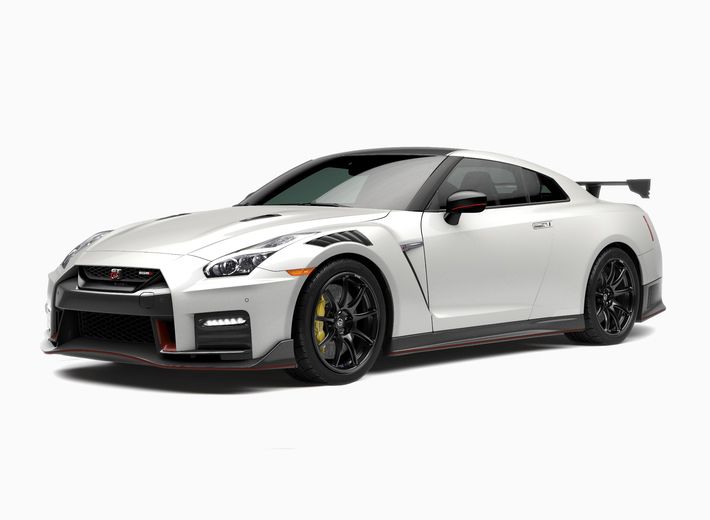
What Is a Spoiler?
A spoiler is a modification that disrupts or "spoils" the flow of air around a car in motion by altering the airstream around and behind your vehicle. A spoiler's purpose is twofold: to reduce the effects of lift and to decrease drag on your car.
Reducing lift helps your car stay firmly rooted to the road at high speeds. Decreased drag means your vehicle moves through the air more efficiently, which helps increase both speed and fuel efficiency.
How Does a Spoiler Work?
Through the simple science of aerodynamics, spoilers reduce drag by smoothing out turbulent air underneath, at the rear, and behind your Nissan ‐ depending on the location of the spoiler. Less turbulent air means less air resistance to slow down your vehicle.
Spoilers also reduce lift by creating a downward force on the vehicle. Think of a spoiler like an airplane wing. During landing, the flaps of an airplane wing are angled upward so that the airflow pushes the plane down. Just like these airplane flaps, a rear spoiler is angled upward to redirect the airflow over the back of the car to help keep it grounded.
Spoilers are an essential addition to race cars, sports cars, and other high-performance vehicles that need to maximize efficiency (like the Nissan NISMO). For the vast majority of consumer cars that don't reach racing speeds, spoilers are more of an accessory than a necessity. The most significant benefit that spoilers may offer to passenger vehicles is the improved fuel efficiency, which comes from reduced drag at highway speeds. Additionally, the right spoiler can transform a regular-looking car into an eye-catching, sporty set of wheels.
Spoilers vs. Wings
Spoilers and wings are often mistaken as the same modification. In reality, they are designed differently and serve two distinct purposes.
While spoilers create a small amount of downforce ‐ enough to combat the airstream's lift effect ‐ rear wings are designed to generate significantly more downforce. This is particularly useful for racing cars, as the increased downward force pushes the car's tires firmly against the pavement, allowing for better traction and precise cornering. In professional racing where the time between first and second place is a matter of milliseconds, more traction and tighter turns can make a world of difference.
Another key difference between spoilers and wings is that wings tend to increase the amount of drag the car experiences rather than decrease it. Wing modifications always involve a trade-off between reducing top speed and acceleration in exchange for better handling.
An easy way to tell the difference between a rear wing and a rear spoiler is how it sits on the car. Wings extend up and out beyond the vehicle's sides so they can capture more air to create downforce. They also tend to be shaped like upside-down airplane wings. Spoilers, on the other hand, conform to the shape of the vehicle and rarely extend more than a foot from the main body.
Types of Spoilers
Front Spoiler
A front spoiler, also known as an air dam, is different from other spoilers in that it is placed at the front of the vehicle. Front spoilers are shaped like a lip or rim that attaches to the bottom of the front bumper or replaces it entirely.
The aerodynamics of a front spoiler, like this one fitted for the Nissan Titan, are similar to that of rear spoilers. However, instead of redirecting turbulent air away from the dip behind your car's rear windshield, a front spoiler moves air away from the parts on the underside of your vehicle. This reduces the amount of air caught on those parts and creates a vacuum of low-pressure air beneath your car. This low-pressure zone creates a suction-like effect that amplifies the downforce from the high-pressure air on top of the vehicle.
Lip Spoiler
Lip spoilers get their name from their curved placement on the lip of a vehicle's trunk. They are the smallest and most understated rear spoiler type, but that doesn't mean they're any less effective at reducing drag and lift. Lip spoilers, like this one for the Nissan Sentra, can be a subtle way to spice up the look of your car while improving fuel economy.
Ducktail Spoiler
Ducktail spoilers, like this one for the Nissan 370Z, are beautiful in their simplicity. Shaped like a duck's tail, this type of spoiler has a broad face that juts up from a car's trunk at a high angle. They are commonly found on race cars for their no-nonsense functionality.
Raised Decklid
A raised decklid spoiler is arguably the sportiest of spoilers. Like the lip spoiler, it has a low profile but features a wider top and a small gap between it and the car's body. Despite this small gap, raised decklids ‐ like this one for the Nissan GT-R ‐ still spoil air just as effectively as other spoilers.
Pedestal Spoiler
Pedestal spoilers, such as this one for the Nissan Versa, get their name from being raised like a "pedestal" on the trunk of the car. They are the largest and most noticeable type of rear spoiler. Pedestal spoilers are often mistaken for wings because of how far they rise from the body of the car, but because their shape still conforms to the width of the vehicle, they function as a spoiler.
Roof Spoiler
A roof spoiler simply refers to a spoiler that's attached at the rear end of a car's roof as opposed to the trunk. Roof spoilers, like this one for the Nissan Rogue, are designed to fit SUVs, crossovers, hatchbacks, and other vehicles that don't have a sedan-style trunk.
Truck Spoiler
Truck spoilers are spoilers designed to fit on the tailgate of a truck. They commonly take the shape of a ducktail spoiler or pedestal spoiler.
Lighted Spoiler
Lighted spoilers refer to spoilers with built-in brake lights. They can take any spoiler shape and are often added for their sporty look. Lighted spoilers must be properly installed to ensure all the brake lights work in unison.
Spoil Yourself with the Best Spoiler for Your Nissan
Not all spoilers are created equal. Some will perform better than others depending on installation specifics, the material they're made of (such as carbon fiber or polyurethane), and how well the design works with your specific Nissan model. Some spoilers are made purely to enhance the vehicle's sporty look and offer no real benefits in terms of fuel efficiency.
Whether you're interested in a spoiler for aesthetic or economic reasons, get your Nissan fitted with original equipment manufacturer (OEM) parts to ensure a precise fit. Moreover, it's easy to mess up a spoiler installation, as even the slightest error in angle adjustment and outfitting can reduce its effectiveness. We recommend bringing your car to your nearest Nissan dealership for professional installation from Certified Technicians.
Ready to spoil unfavorable air resistance and empower your horsepower? Find the right OEM spoiler for your Nissan and order it online today.