


Helpful Tips for Troubleshooting Loose Battery Parts
January 14, 2021
Temperature can affect your vehicles battery and even reduce its overall lifespan. Between cold winter storms and scorching summer heat waves, you may find yourself needing a jump in more extreme temperatures. But you may not know that loose battery parts can cause you just as much trouble! Learn which battery parts can come loose and how to troubleshoot them.
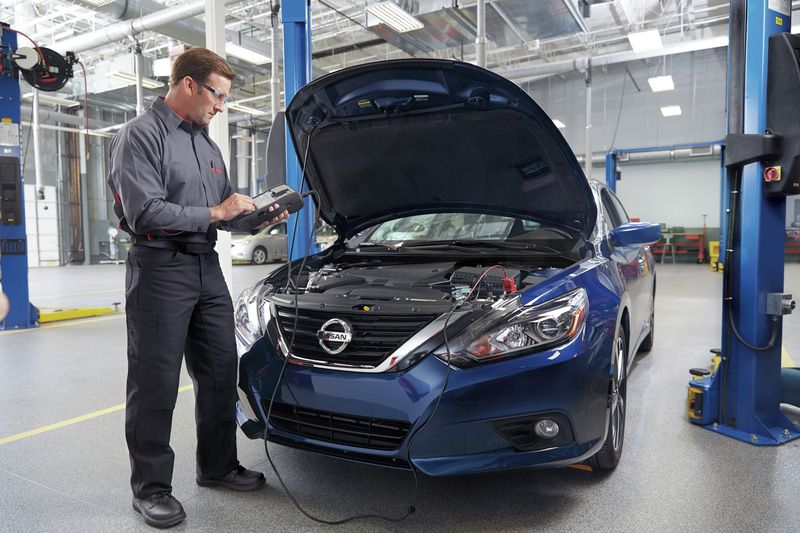
Signs of Loose Battery Parts
There are a few ways in which battery connections can become loose and create issues. If you're having battery issues, check your electrical systems before doing anything else. Your headlights, interior lights, radio, or external accessories and gadgets may have drained your battery.
Check your car to see if you accidentally killed the battery by leaving things plugged in, charging, on, or illuminated. If an accidental drain isn't the culprit for your Nissans battery light coming on, you could be dealing with loose battery parts. Here are a few signs that you might have loose battery parts.
1. you're having trouble starting your car.
One of the surest signs of a loose battery connection is having problems starting your car. It doesn't matter how much power your battery has. If the connection isn't strong, you wont be able to start your car.
If starting your car results in a delayed start or no start at all, it might be loose battery terminals. Check your connections to ensure you cant wiggle or shift any of the cables, terminals, or the battery itself.
2. Your vehicle shows low car battery voltage.
If your car is showing a low voltage reading on a battery tester, there's a chance the battery cables need a stronger connection. Battery cables need a secure and tight connection to transfer the electricity from the alternator into the battery. Loose or corroded battery cables can cause your voltage reading to drop.
3. Your negative battery cable is hot.
If your negative battery cable ‐ or ground cable ‐ is loose, the cable can heat up due to increased resistance in the flow of electricity. If the cable seems warm or hot to the touch (be careful!), it could be loose and require a better connection to the battery to provide full power to the vehicle.
4. Your headlights are flickering.
A loose battery connection can cause your headlights to flicker or dim. Headlights need a strong and steady flow of electricity to light the road ahead of you. If you have a loose battery terminal that moves or wiggles while you drive, that flow of electricity can get interrupted, and your headlights can flicker or dim as a result.
Fixing Loose Battery Parts
Fixing loose battery parts is essential to maintaining a secure electrical connection in your Nissan. If you suspect your vehicle has loose battery parts, use these two simple tips to help troubleshoot your battery problems.
1. Inspect your batteries connections.
First, inspect your battery connections. Are they free of powdery-white battery corrosion, or do they need to be cleaned? Does the battery or either battery cable feel loose? A loose battery connection can occur either through hardware needing to be tightened or corrosion interfering with the connection.
Make sure your battery connections are clean. Then, make sure the battery is securely attached to the battery tray, and any loose battery cables and connections are tightened until they cant be shifted or wiggled. There should be a nut on each battery terminal that tightens the cable connection to the battery with a few simple turns of a wrench. Tightening the battery terminals can be a quick fix to dead battery issues in the instance of a loose battery.
Once your battery connections are inspected and secured, ensure your battery is charged for use before starting or driving your vehicle.
2. Test your batteries voltage.
Test your batteries voltage using a multimeter. Connect the black multimeter lead to the negative battery cable and the red lead to the positive cable. Check your Nissan owners manual to know exactly where your voltage should fall, but generally, a reading of 12.45 volts or higher means your battery has enough charge. If your voltage is low, it might mean you have a dead battery and need a replacement battery. don't have a multimeter in your garage? Stop by your nearest Nissan service center for a free battery check.
Replace Your Battery Parts with Genuine Nissan Parts
Do you need replacement battery parts for your Nissan? Shop genuine Nissan battery parts online for custom-designed and custom-fitted replacement parts for your Nissans model and year. Visit your nearest authorized retailer for installation help.
Shop Nissan Battery PartsShop Nissan BatteriesShop All Nissan Parts